
Destination guide
Ngorongoro Crater
A collapsed volcano cradling one of Africa's densest wildlife arenas
The story
A short history of Ngorongoro Crater
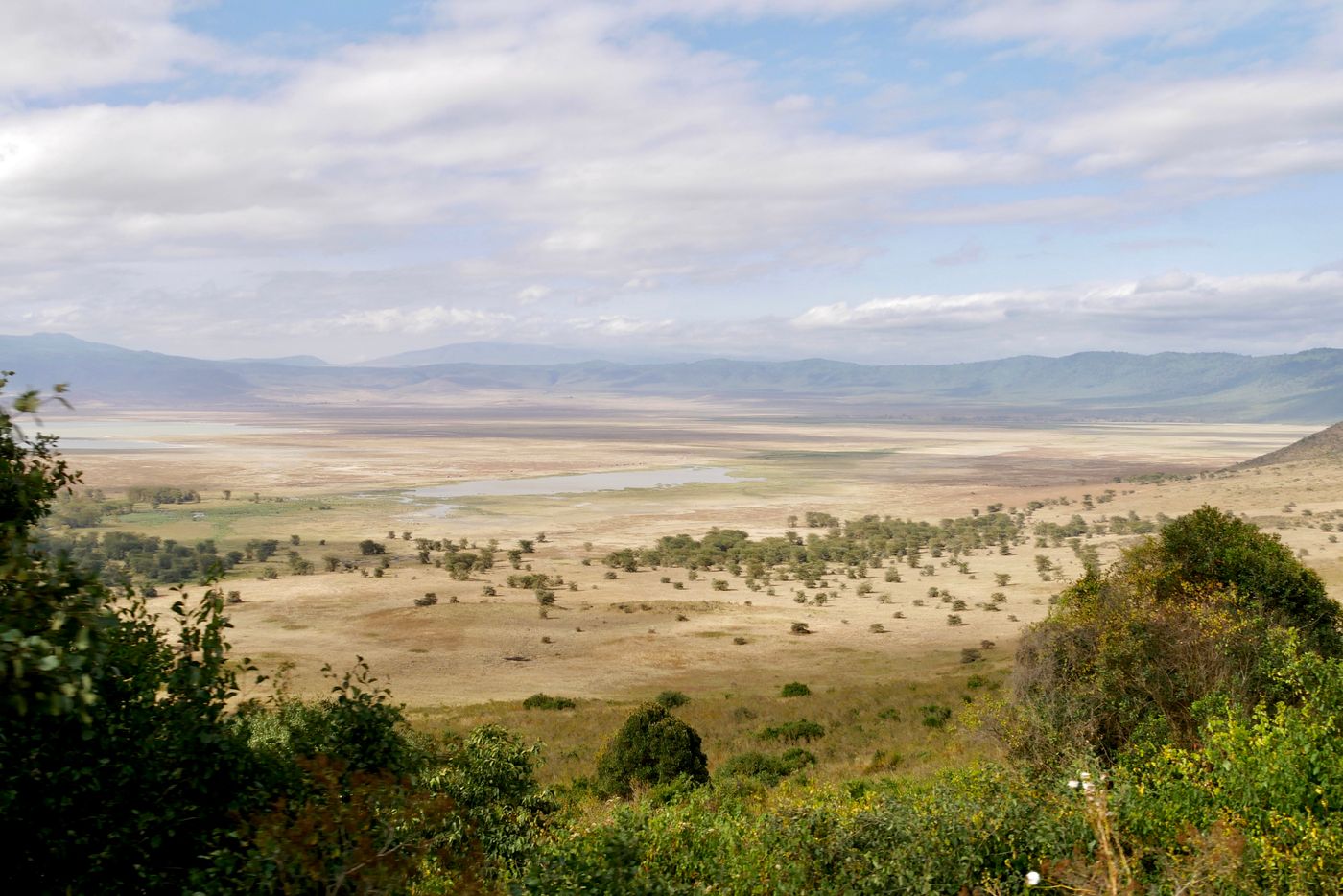
The Ngorongoro Crater formed some two to three million years ago when a giant volcano erupted and collapsed in on itself, leaving the largest unbroken, unflooded caldera on Earth. Its walls rise around 400 to 600 metres above a floor of grassland, swamp, lake and forest, an enclosed world that sustains roughly 25,000 large animals. This natural amphitheatre is the centrepiece of the Ngorongoro Conservation Area, some 180 kilometres west of Arusha.
The surrounding highlands are among the most important sites in the story of humankind. Nearby Olduvai (Oldupai) Gorge yielded early hominin fossils and stone tools uncovered by Louis and Mary Leakey, earning it the nickname the Cradle of Mankind, while footprints at Laetoli record bipedal ancestors walking upright millions of years ago. The area was declared a UNESCO World Heritage Site in 1979 for both its natural and cultural value.
Ngorongoro is unusual as a conservation area that deliberately blends wildlife protection with human habitation. Maasai pastoralists live within its boundaries and graze cattle across the highlands, sharing the land with lions, elephants, buffalo and the rare black rhino. This multiple-land-use model, and the density of animals on the crater floor, make Ngorongoro one of the most celebrated safari destinations in Africa.