
Destination guide
Serengeti
Endless plains and the stage of the great wildebeest migration
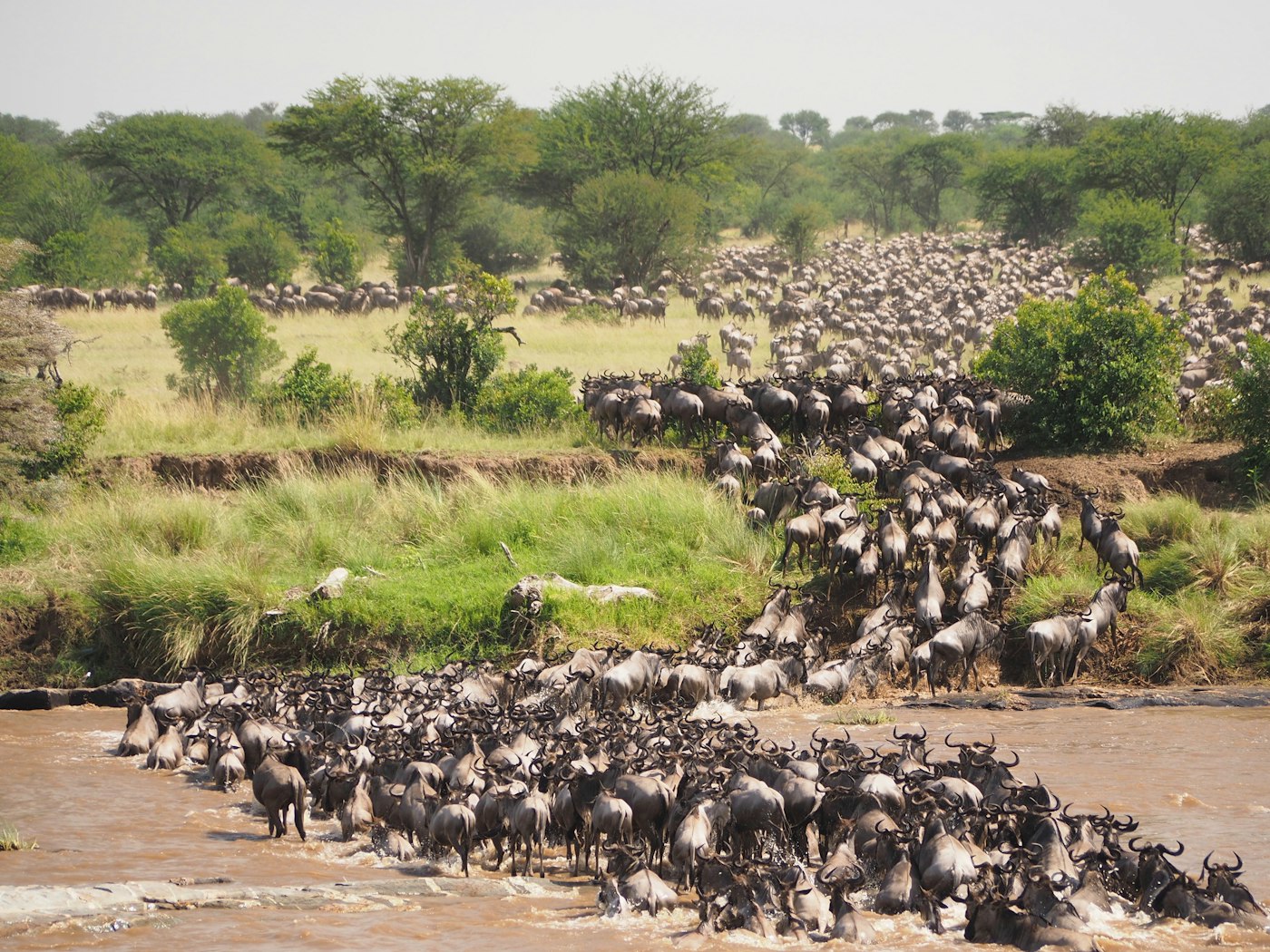
The Serengeti is Tanzania's flagship national park, a vast sea of grassland that hosts the great migration of over a million wildebeest and hundreds of thousands of zebra. Travellers come for classic big-cat country and, in season, the dramatic river crossings.
By the numbers
~15,000 km²
Park size
of open plains and woodland
1.5 M+
Wildebeest
on the great migration
~250,000
Zebra
migrate alongside the wildebeest
Since 1951
National park
Tanzania's oldest and most famous
UNESCO site
Status
World Heritage and Biosphere Reserve
Prime habitat
Big cats
lions, cheetahs and leopards
Best time to visit
The dry season from June to October is prime for general game viewing and for the Mara River crossings in the north. For the calving season, visit the southern short-grass plains between January and March, when hundreds of thousands of wildebeest give birth.