
Destination guide
Serengeti
Endless plains and the stage of the great wildebeest migration
The story
A short history of Serengeti
The name Serengeti comes from the Maasai word siringet, meaning the place where the land runs on forever, and the plains stretch across some 15,000 square kilometres of northern Tanzania into Kenya's Masai Mara. For millennia the Maasai grazed cattle across this grassland alongside vast herds of wild grazers. The area was set aside for wildlife in the colonial era, becoming a national park in 1951 and later a UNESCO World Heritage Site and Biosphere Reserve.
The Serengeti rose to global fame through the work of Bernhard and Michael Grzimek, whose 1959 book and film Serengeti Shall Not Die alerted the world to the ecosystem and its migration. Their research helped shape modern conservation of the plains and cemented the Serengeti's place in the popular imagination as the archetypal African wilderness.
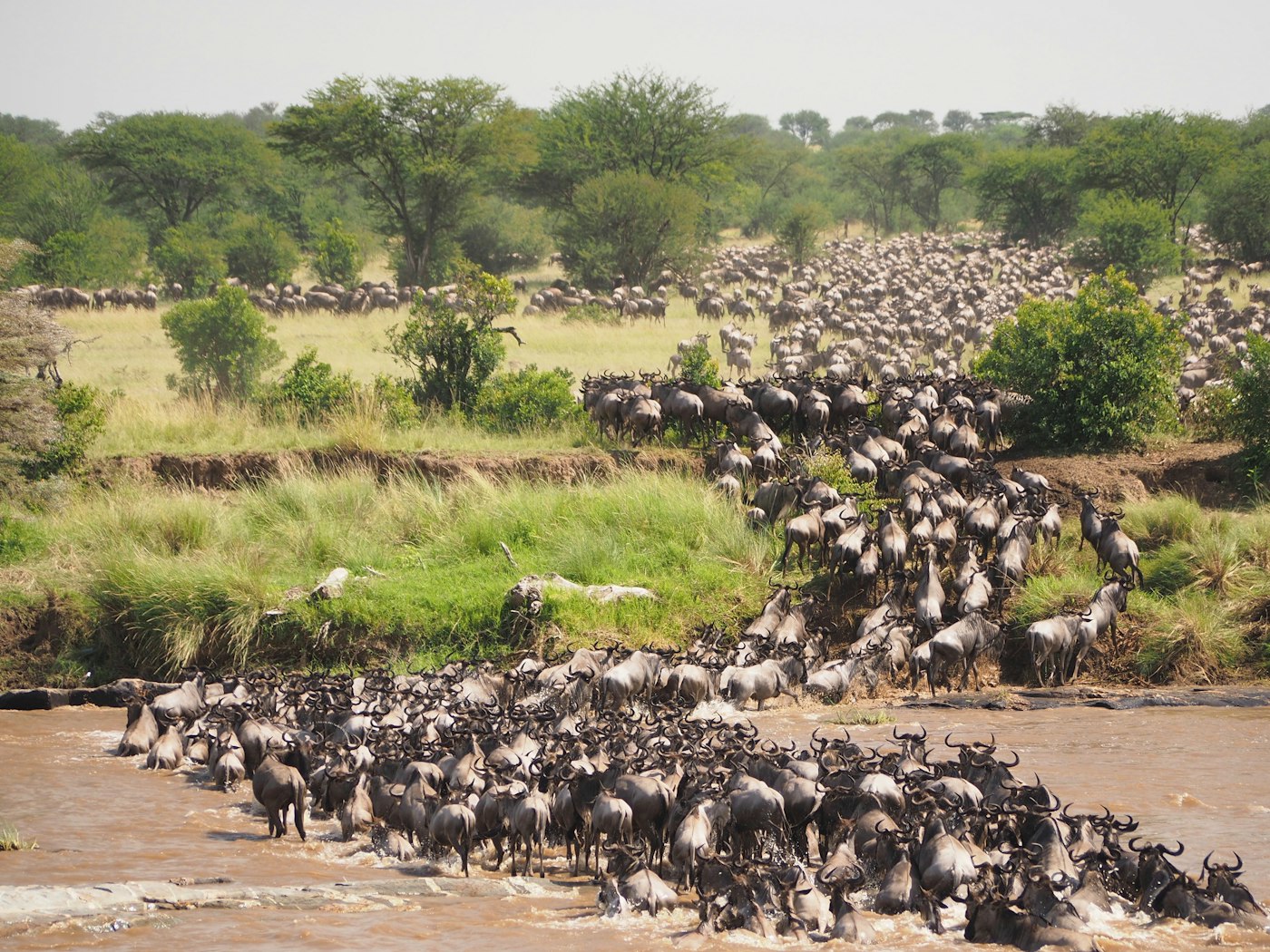
At the ecosystem's heart is the great migration, a year-round circular movement of more than 1.5 million wildebeest and around 250,000 zebra following the rains in search of fresh grass. The herds calve on the southern plains early in the year, sweep north and west through the dry season, and brave crocodile-filled river crossings, making the Serengeti one of the greatest wildlife spectacles on Earth.